Good to Know
lOCATION
Everest Region
TRIP TYPE
Expeditions
TRANSPORTATION
Flight and Drive
ARRIVAL ON
kathmandu
DEPARTURE FROM
Kathmandu
Maximum Altitude:
7129 M
GROUP SIZE
+2
BARUNTSE CLIMB (7129 M)
A Hidden Himalayan Giant in the Heart of the Khumbu
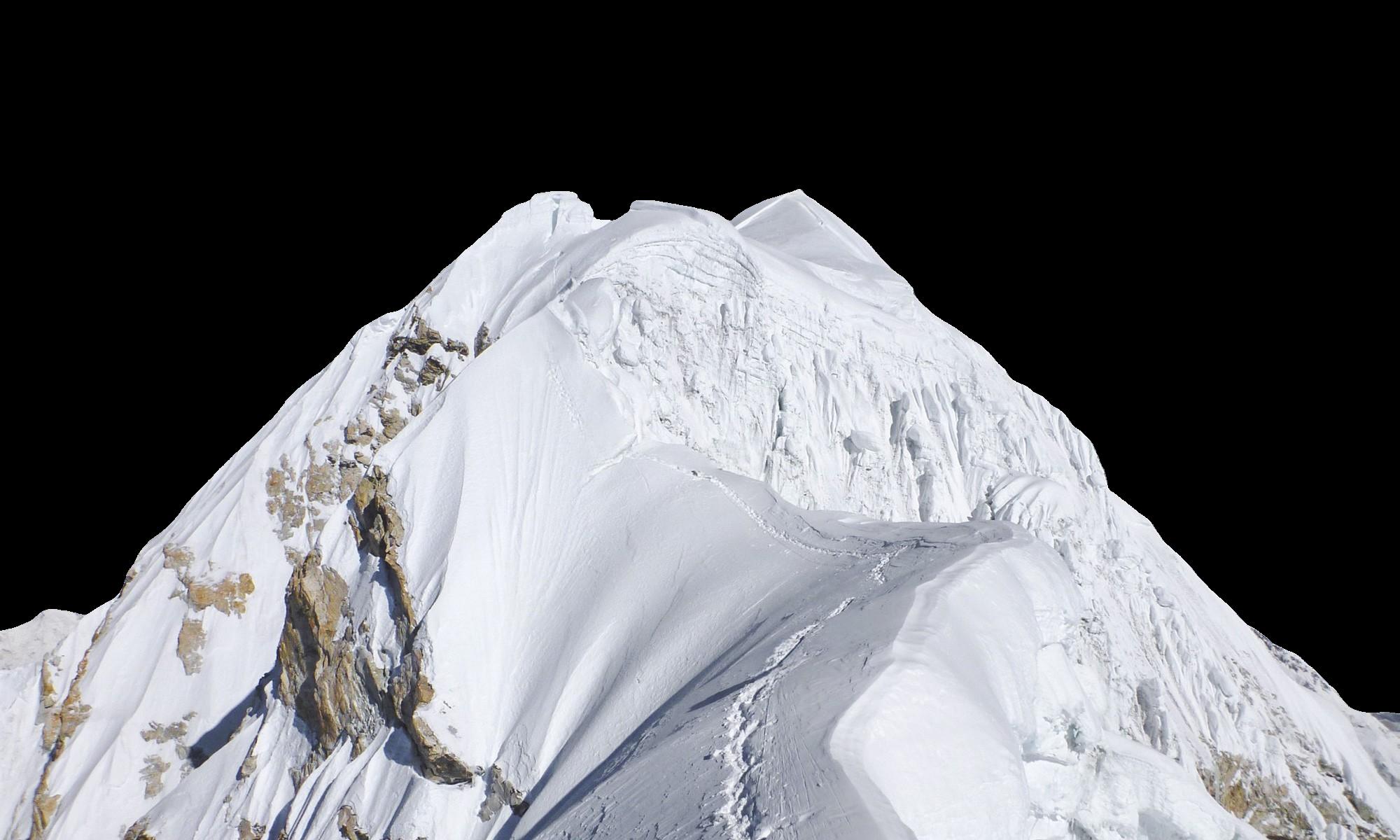
Baruntse, rising proudly to 7,129 meters, is one of the Khumbu region’s most striking yet lesser-known peaks—earning its reputation as the “hidden giant” of eastern Nepal. Wedged between legendary summits such as Everest, Makalu, and Lhotse, Baruntse provides an exceptional blend of scenic beauty and technical challenge, making it a highly rewarding expedition for seasoned mountaineers seeking a true Himalayan experience.
The Route and Landscape
Positioned between the secluded Makalu-Barun and Khumbu valleys, the Baruntse journey often includes dramatic crossings such as Mera La or Amphu Laptsa Pass. These approaches lead climbers through some of Nepal’s most untouched landscapes—silent alpine basins, icy blue lakes, vast glacial fields, and remote valleys far removed from the busier Everest routes.
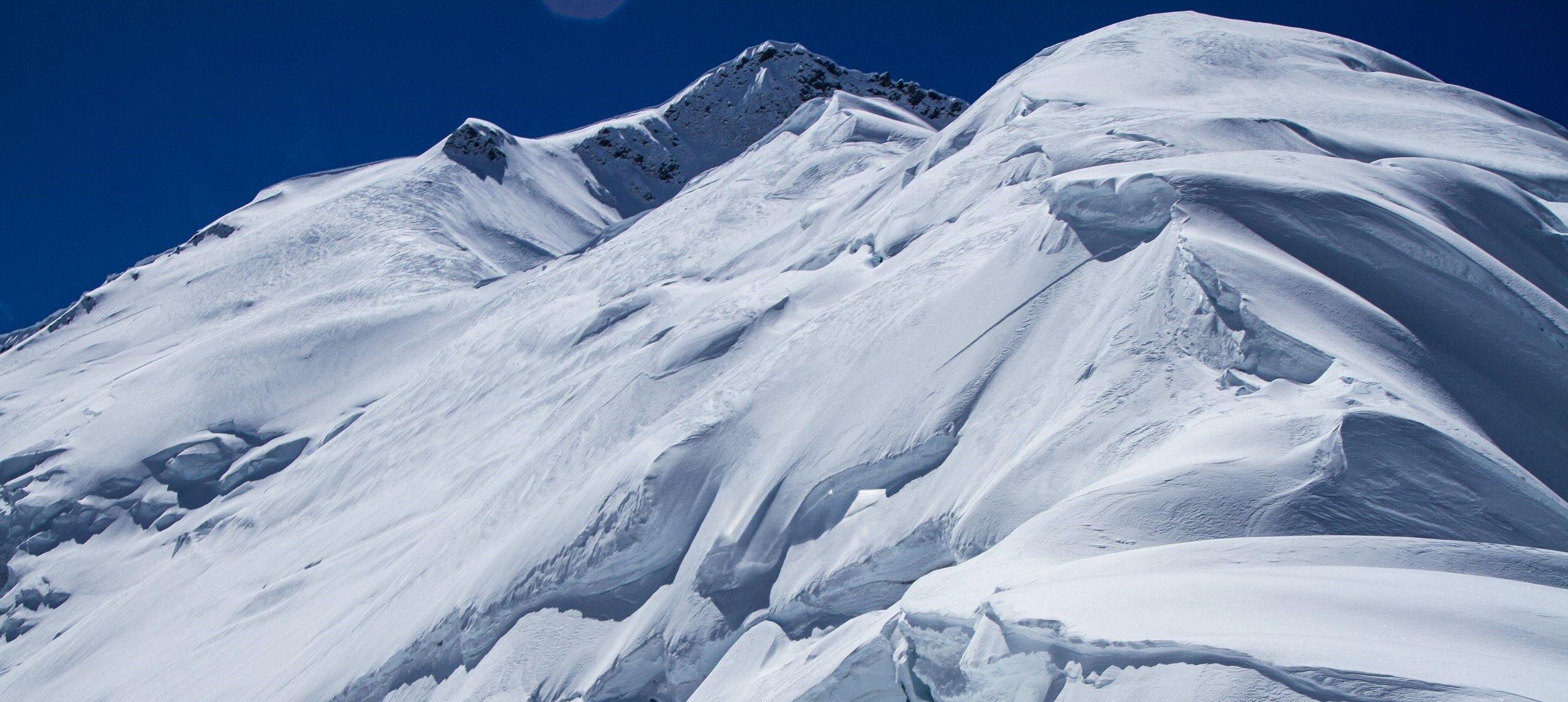
Base Camp is usually established near the sprawling Barun Glacier. From there, climbers ascend via the southeast ridge or east ridge, depending on mountain conditions and team strategy. Baruntse’s clean, aesthetic lines, elegant ridges, and mixed snow-and-ice terrain offer a classic high-altitude climb characterised by skill, endurance, and remarkable views.
Historical First Ascent
Baruntse was first summited on May 30, 1954, by Colin Todd and Geoff Harrow from a New Zealand team led by Sir Edmund Hillary, who had successfully reached the top of Everest only a year earlier. Their pioneering ascent via the South Ridge remains the standard and most frequented route used by modern expeditions.
Guide-to-Client Ratio:
Base Camp to Summit
A: 1:1 – One Guide per Climber: Safest and most reliable option—especially recommended for climbers with limited technical experience.
B: 1:2 – One Guide for Two Experienced Climbers: Suitable only for confident teams who are well accustomed and proficient in steep snow and ice.
Oxygen Recommendation
For additional safety and emergency preparedness, we provide 1 emergency oxygen bottle (4L) per climber.
This is reserved for critical altitude-related situations at high camps or during a summit push.
Baruntse (7,129m) Expedition – Three High Camps
Baruntse Expedition Timeline
Spring Season
Late April to Early May – Arrival & Approach
Climbers arrive in Kathmandu to complete paperwork, final gear checks, and expedition briefings. From the capital, the team drives to Ramechap and boards a mountain flight to Lukla before beginning the trek toward Baruntse Base Camp through remote valleys.
Early to Mid-May – Establishing Base Camp
The team sets up Base Camp and begins the acclimatisation phase. Short practice climbs and rotations toward higher camps help climbers adapt gradually to increasing altitude.
Mid May – Acclimatisation
Climbing Rotations
Climbers move strategically between Base Camp and higher camps—sleeping high, climbing higher, and returning low—allowing their bodies to adjust. Equipment caches are placed, and summit plans are finalised.
Late May – The Summit Push
A stable weather window in late May typically offers the safest opportunity for reaching the summit. The team ascends through high camps, navigating steep ridges and glaciated slopes to reach the magnificent summit of Baruntse.
Early June – Descent & Return
After a successful summit attempt, the team descends to Base Camp, cleans up the climbing route, and treks back toward Lukla. The expedition concludes in Kathmandu, where climbers celebrate their achievement.
Baruntse Expedition Timeline
Autumn Season
Late September to Early October – Arrival & Approach
The expedition begins in Kathmandu, where climbers complete permit formalities, gear checks, and logistical preparation. From the capital, the team drives to Ramechap, flies to Lukla, and then begins a multi-day trek toward Baruntse Base Camp through the remote valleys of the Khumbu and Makalu–Barun regions.
Early to Mid-October – Base Camp Establishment
Upon reaching the Baruntse Base Camp, the team sets up tents, communication systems, dining facilities, and storage areas. During this time, Sherpa guides start the first rotations—ascending to higher camps to fix tents, secure the route, and transport essential equipment. Climbers begin light acclimatisation hikes around Base Camp.
Mid to Late October – Acclimatisation Rotations
This is the core phase of the expedition. Climbers complete multiple rotations between Base Camp and the higher camps, gradually adapting to the altitude and reviewing technical skills needed for the climb. Gear checks, safety drills, and final strategy briefings prepare the team for the summit attempt.
Late October – Summit Push
The summit attempt is normally launched during a stable weather window in late October, when conditions on the ridges and upper slopes are most favourable. Climbers ascend through established high camps, making their final push to the summit of Baruntse—7,129 meters of pure Himalayan beauty.
Early November – Descent & Return
After celebrating the successful summit, climbers descend to Base Camp, pack gear, and begin the trek back toward Lukla. A final flight and drive return the team to Kathmandu, concluding the expedition.
Our Expedition Services
Adventure Fourteen Summit provides two service packages to suit different climbing preferences: Full Board Service, which includes support from Base Camp to the summit, and Base Camp Service, offering assistance up to Base Camp only.
Full Board Service
A complete, end-to-end expedition package covering everything from arrival to departure:
1: All permits and paperwork
2: All transportation (Kathmandu–Ramechap–Lukla and return)
3: Hotels, lodges, and all meals during the trek
4: Professional guides and porters
5: High-altitude Sherpa support
6: Supplementary oxygen (as required)
7: All climbing equipment, tents, and logistics up to the summit
8: Ideal for climbers who want a fully supported, stress-free climb.
Base Camp Service
Designed for independent climbers who prefer to manage their own ascent above Base Camp. This package includes:
1: All permits and logistics to reach Base Camp
2: Trekking accommodation and meals
3: Base Camp tent, meals, and communication support
4: Climbing above Base Camp is self-managed.
Why Choose Adventure Fourteen Summit for Baruntse?
Adventure Fourteen Summit proudly organises Baruntse Expeditions every autumn and spring, providing safe, professionally managed expeditions on one of Nepal’s most captivating 7,000-meter peaks. With experienced guides, high-standard logistics, and strong safety protocols, we ensure a reliable and rewarding Himalayan experience.
Baruntse is also known as an excellent training mountain for climbers preparing for the 8,000-meter giants such as Everest, Manaslu, and Dhaulagiri. Its moderate technical sections, high altitude, and structured camp system make it perfect for building confidence and gaining essential skills.
Whether you are stepping into high-altitude mountaineering or preparing for your first 8,000er, Baruntse is an exceptional choice—and we provide the expertise to make your climb successful.
HIGHLIGHT OF BARUNTSE CLIMB (7129 M)
 Meet Our Expert
TEMBA SHERPA
Meet Our Expert
TEMBA SHERPA
All Inclusive Price.
$
0
Best
GuaranteeValue
Itinerary
Arrive at Tribhuvan International Airport, where our representative greets you and assists with your transfer to a comfortable hotel in Kathmandu. Take time to relax after your journey or stroll through the bustling streets of Thamel. In the evening, enjoy a welcome dinner at a traditional Nepali restaurant with a cultural dance performance.
ACCOMODATION
star hotel
MAX ALTITUDE
1,400m
MEALS
B/B
After breakfast, spend the morning exploring local markets or buying last-minute climbing gear. In the afternoon, attend a comprehensive briefing at our expedition office. You’ll meet your climbing guides, go over the itinerary, discuss the climbing strategy, safety procedures, and equipment checks. This is also the day to clarify any personal requirements before departure.
ACCOMODATION
Star hotel
MAX ALTITUDE
1,400m
MEALS
B/B
A scenic 35-minute flight to Lukla marks the start of your adventure. After breakfast, trek down through lush forests to Shurke village, stopping at Pakhapani for lunch. Continue through a series of ridges, villages, and forested trails before reaching Paiya, with views of Kongde Ri, Khatang, and Tang Ragi Tu.
ACCOMODATION
Lodge
MAX ALTITUDE
2,730m
MEALS
B/L/D
Cross the wooden bridge over Kari La Pass before entering the forests of rhododendron and bamboo. Enjoy panoramic views of the Dudh Koshi River Valley and Dudh Kund Himal before arriving in the farming village of Pangkoma.
ACCOMODATION
Lodge
MAX ALTITUDE
2,850m
MEALS
B/L/D
Descend through rhododendron forests, pass Mani walls, and admire stunning views of Mera Peak’s south face and Naulekh Peak. The day ends with a steep descent through pine and rhododendron forests to Nigmsa.
ACCOMODATION
Lodge
MAX ALTITUDE
2,745m
MEALS
B/L/D
Hike a narrow, steep trail through thick forests, cross small streams, and descend through bamboo groves. The day’s trek ends beside a small cave near Chetra Khola.
ACCOMODATION
Lodge
MAX ALTITUDE
3,150m
MEALS
B/L/D
Reach a scenic ridge with views of Mera Peak and Hinku Valley, then pass through bamboo and pine forests. The final climb to Kothe may reveal wildlife such as jungle cats or Himalayan birds.
ACCOMODATION
Lodge
MAX ALTITUDE
3,600m)
MEALS
B/L/D
Follow the Hinku Khola to Gondishung, visiting the ancient Lungsumgba Gompa en route. Continue to Thangnak, a high summer pasture.
ACCOMODATION
Lodge
MAX ALTITUDE
4,350m
MEALS
B/L/D
Ascend alongside the Dig Glacier to Dig Kharka, with views of Charpate Himal. Climb steep moraines to Khare, offering close-up views of Mera Peak.
ACCOMODATION
Lodge
MAX ALTITUDE
5,045m
MEALS
B/L/D
Practice ice climbing and review rope techniques under your guide’s supervision. This training ensures readiness for Mera and Baruntse climbs.
ACCOMODATION
Lodge
MAX ALTITUDE
5,045m
MEALS
B/L/D
Climb rocky slopes and navigate crevasses en route to high camp. Watch sunset over Everest, Makalu, and Kangchenjunga.
ACCOMODATION
Tent
MAX ALTITUDE
5,780m
MEALS
B/L/D
Pre-dawn start. Ascend gradually over the glacier, with the sun rising over the Himalayan giants. From the summit, enjoy views of Everest, Lhotse, Makalu, Cho Oyu, and more. Descend to Kongma Dingma.
ACCOMODATION
Tent
MAX ALTITUDE
4,850m
MEALS
B/L/D
The trek from Kongma Dingma (4,850m) to Seto Pokhari (5,035m) is one of the most scenic and remote sections of the Baruntse approach, crossing deep into the upper Hongu Valley. surrounded by towering peaks like Chamlang, Peak 41, and the Baruntse massif.
ACCOMODATION
Tent
MAX ALTITUDE
5,035m
MEALS
B/L/D
Pass Seto Pokhari (White Lake) and traverse the isolated Hongu Valley before reaching Baruntse Base Camp.
ACCOMODATION
Tent
MAX ALTITUDE
5,250m
MEALS
B/L/D
After arriving at Baruntse Base Camp, the team takes a rest day to recover from the trek and acclimatize to the altitude. Climbers check and organize their climbing gear, including boots, crampons, harnesses, ropes, and high-altitude clothing. The guides and Sherpa team review the climbing plan and prepare equipment for Camp I and Camp II. This day is also used to test communication devices and finalize logistics before starting load carries and acclimatization rotations on Baruntse (7,112 m).
Note: Sometimes it may be necessary to stay more than 4/5 nights due to the summit weather window.”
ACCOMODATION
Tent
MAX ALTITUDE
5,250m
MEALS
B/L/D
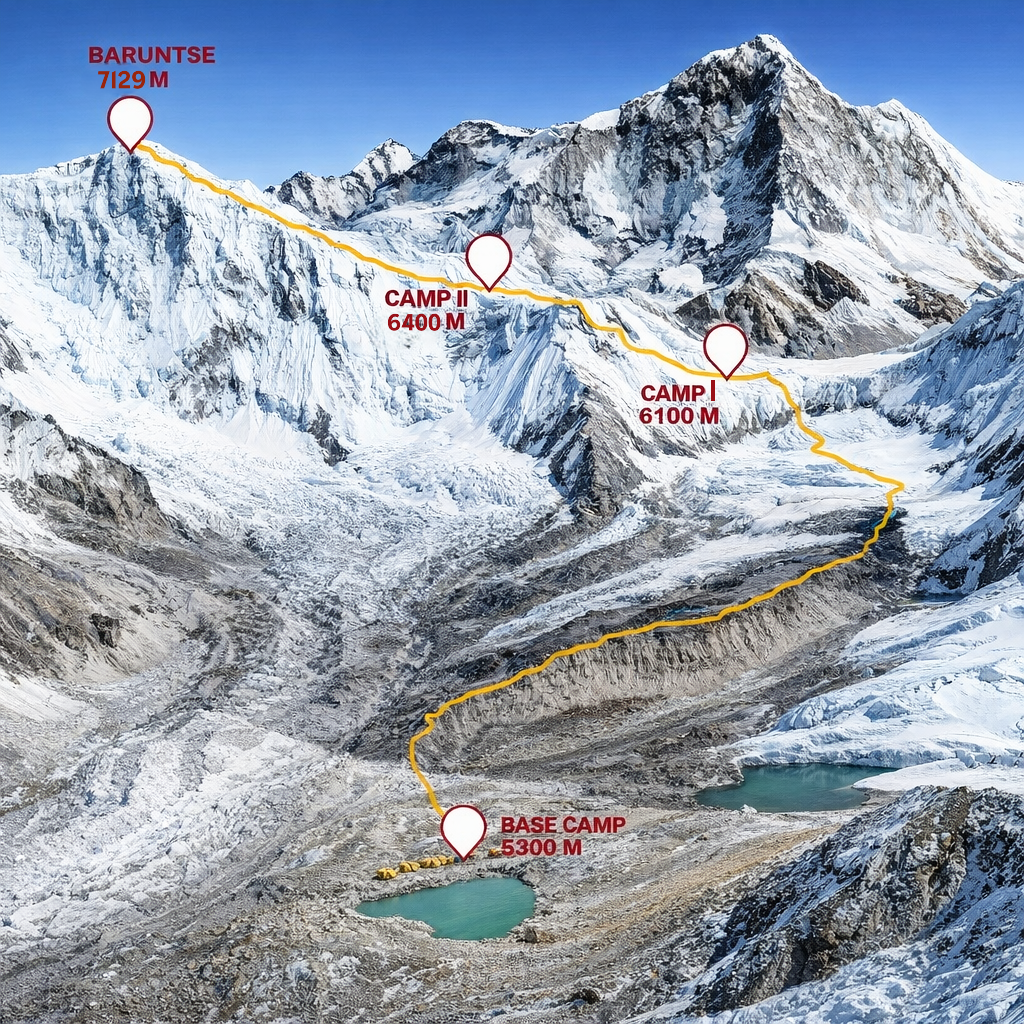
Climbers depart early from Base Camp and ascend through the Baruntse Glacier on snow and glacier terrain. Some sections require the use of fixed ropes with crampons and harness. The climb takes about 5–7 hours. Upon arrival at Camp I, climbers rest and prepare for the next stage.
ACCOMODATION
Tent
MAX ALTITUDE
(6,100 m)
MEALS
B/L/D
The route from Camp I to Camp II is steeper and more technical, with snow slopes and fixed rope sections. The climb usually takes 4–6 hours. Camp II is more exposed, so climbers rest, hydrate well, and prepare for the summit push.
ACCOMODATION
Tent
MAX ALTITUDE
(6,400–6,500 m)
MEALS
B/L/D
Summit push begins around midnight or 1:00 AM. Climbers ascend steep snow slopes and ridges using fixed ropes. After reaching the summit of Baruntse (7,129 m) and enjoying views of Everest, Lhotse, Makalu, and Ama Dablam, the team carefully descends back to Camp II or Camp I. Summit day can take 10–14 hours.
ACCOMODATION
Tent
MAX ALTITUDE
(7,129 m) back to (6100m)
MEALS
B/L/D
The following day, climbers descend safely from Camp II or Camp I back to Base Camp. After returning, the team rests and celebrates the successful summit.
This rotation plan allows climbers to safely reach the summit of Baruntse (7,129 m) with proper support and acclimatization. 🏔️
ACCOMODATION
Tent
MAX ALTITUDE
(5,300 m)
MEALS
B/L/D
ACCOMODATION
Tent
MAX ALTITUDE
(5,035m)
MEALS
B/L/D
ACCOMODATION
Lodge
MAX ALTITUDE
5050m
MEALS
B/L/D
ACCOMODATION
Lodge
MAX ALTITUDE
3600m
MEALS
B/L/D
ACCOMODATION
Lodge
MAX ALTITUDE
4300m
MEALS
B/L/D
ACCOMODATION
Lodge
MAX ALTITUDE
2800m
MEALS
B/L/D
ACCOMODATION
star hotel
MAX ALTITUDE
1400m
MEALS
B/B
Cost Include
- Airport pickup and drop-off in private transport in Kathmandu
- 3 nights’ hotel accommodation in Kathmandu with a Bed & Breakfast plan
- Welcome and farewell dinners in Kathmandu
- Boruntse Climbing Permit & Makalu Barun National Park fee
- Mera Peak climbing permit
- Domestic transportation to/from the trail head (flight /private jeep, or local bus)
- Lodge accommodation and full-board meals during trekking and expedition
- Private tent at Base Camp and Private tents are generally not recommended at higher altitude for safety and efficiency.
- Mattress and pillow provided at Base Camp
- High-quality dining tent and communication tent with tables and chairs
- Hygienic shower tent and toilet tent provided at Base Camp
- High-altitude Sherpa guide at a 1:1 ratio during climbing
- Porters and guide service to/from the trailhead and bountse base camp
- Emergency: One bottle oxygen cylinders per climber with mask and regulator
- Rope fixing charge and expedition garbage deposit
- Staff wages, insurance, and liaison officer service
- Base Camp staff: cook, kitchen helpers, and expedition manager
- Group climbing equipment (tents, ropes, ice screws, snow bars, etc.)
- Satellite phone (for emergency use) and two-way Radio
- Solar and generator-powered lights and charging facilities at Base Camp
- Adventure Fourteen Summit T-shirt, cap, and duffel bag for the expedition
Cost Exclude
- International flights to/from Kathmandu
- Nepal visa fee (on arrival, approx. USD 50 for 30 days)
- Personal climbing and trekking gear/equipment
- Personal travel and rescue insurance (mandatory)
- Meals during the stay in Kathmandu (except welcome and farewell dinners)
- Tips for guides, porters, and staff (customary but not compulsory)
- Extra hotel nights in case of early return
- Alcoholic beverages, personal snacks, and bottled drinks at Base Camp
- Internet, shower, and laundry services at Base Camp (extra cost)
- Special drone/filming permits (if required)
- Summit bonus for climbing Sherpa – minimum USD 1000 per Sherpa
FIXED DEPARTURE OF BARUNTSE CLIMB (7129 M)
Map
Reviews
Meet Our Expert
TEMBA SHERPA
All Inclusive Price.
$
0
Best
GuaranteeValue
𝗪𝗘'𝗗 𝗟𝗢𝗩𝗘 𝗧𝗢 𝗛𝗔𝗩𝗘 𝗔 𝗖𝗛𝗔𝗧
"𝗜𝗳 𝘆𝗼𝘂'𝗿𝗲 𝗶𝗻𝘁𝗲𝗿𝗲𝘀𝘁𝗲𝗱 𝗶𝗻 𝗱𝗶𝘀𝗰𝘂𝘀𝘀𝗶𝗻𝗴 𝘆𝗼𝘂𝗿 𝗻𝗲𝘅𝘁 𝗮𝗱𝘃𝗲𝗻𝘁𝘂𝗿𝗲, 𝗻𝗲𝗲𝗱 𝗮𝘀𝘀𝗶𝘀𝘁𝗮𝗻𝗰𝗲 𝘄𝗶𝘁𝗵 𝗽𝗹𝗮𝗻𝗻𝗶𝗻𝗴, 𝗼𝗿 𝘀𝗶𝗺𝗽𝗹𝘆 𝘄𝗮𝗻𝘁 𝘁𝗼 𝗵𝗮𝘃𝗲 𝗮 𝗰𝗵𝗮𝘁 𝗮𝗯𝗼𝘂𝘁 𝗮𝗻𝘆 𝘁𝗼𝗽𝗶𝗰, 𝗳𝗲𝗲𝗹 𝗳𝗿𝗲𝗲 𝘁𝗼 𝗮𝘀𝗸 𝗺𝗲 𝗮𝗻𝘆𝘁𝗵𝗶𝗻𝗴 𝗵𝗲𝗿𝗲. 𝗜'𝗺 𝗺𝗼𝗿𝗲 𝘁𝗵𝗮𝗻 𝗵𝗮𝗽𝗽𝘆 𝘁𝗼 𝗵𝗲𝗹𝗽 𝗶𝗻 𝗮𝗻𝘆 𝘄𝗮𝘆 𝗜 𝗰𝗮𝗻!"
+𝟵𝟳𝟳-𝟬𝟭𝟱𝟵𝟮𝟬𝟴𝟵𝟵 | +𝟵𝟳𝟳 𝟵𝟴𝟰𝟭𝟯𝟭𝟲𝟯𝟵𝟮
WANT TO CUSTOMIZE YPUR OWN TRIP
PLANNING A TRIP ?
"𝗪𝗲 𝗵𝗮𝘃𝗲 𝗮 𝘁𝗲𝗮𝗺 𝗼𝗳 𝗲𝘅𝗽𝗲𝗿𝗶𝗲𝗻𝗰𝗲𝗱 𝘁𝗿𝗮𝘃𝗲𝗹 𝗲𝘅𝗽𝗲𝗿𝘁𝘀 𝘄𝗵𝗼 𝗵𝗮𝘃𝗲 𝗯𝗲𝗲𝗻 𝘄𝗼𝗿𝗸𝗶𝗻𝗴 𝗶𝗻 𝘁𝗵𝗶𝘀 𝗶𝗻𝗱𝘂𝘀𝘁𝗿𝘆 𝗳𝗼𝗿 𝗼𝘃𝗲𝗿 𝗮 𝗱𝗲𝗰𝗮𝗱𝗲. 𝗙𝗲𝗲𝗹 𝗳𝗿𝗲𝗲 𝘁𝗼 𝗰𝗼𝗻𝘀𝘂𝗹𝘁 𝘄𝗶𝘁𝗵 𝘂𝘀 𝘁𝗼 𝗴𝗲𝘁 𝘀𝘁𝗮𝗿𝘁𝗲𝗱 𝗼𝗻 𝘆𝗼𝘂𝗿 𝗻𝗲𝘅𝘁 𝗮𝗱𝘃𝗲𝗻𝘁𝘂𝗿𝗲!"


© Copyright Adventure 14 Summit Expedition.