


Good to Know
lOCATION
Khumbu Region
TRIP TYPE
Trekking in Nepal
TRANSPORTATION
Flight and Drive
ARRIVAL ON
kathmandu
DEPARTURE FROM
Kathmandu
Maximum Altitude:
5200 M | 5550 M
GROUP SIZE
+1 pax
ACCOMMODATION
Lodge and Tent
TRIP CODE
2026y
EVEREST THREE HIGH PASSES TREK
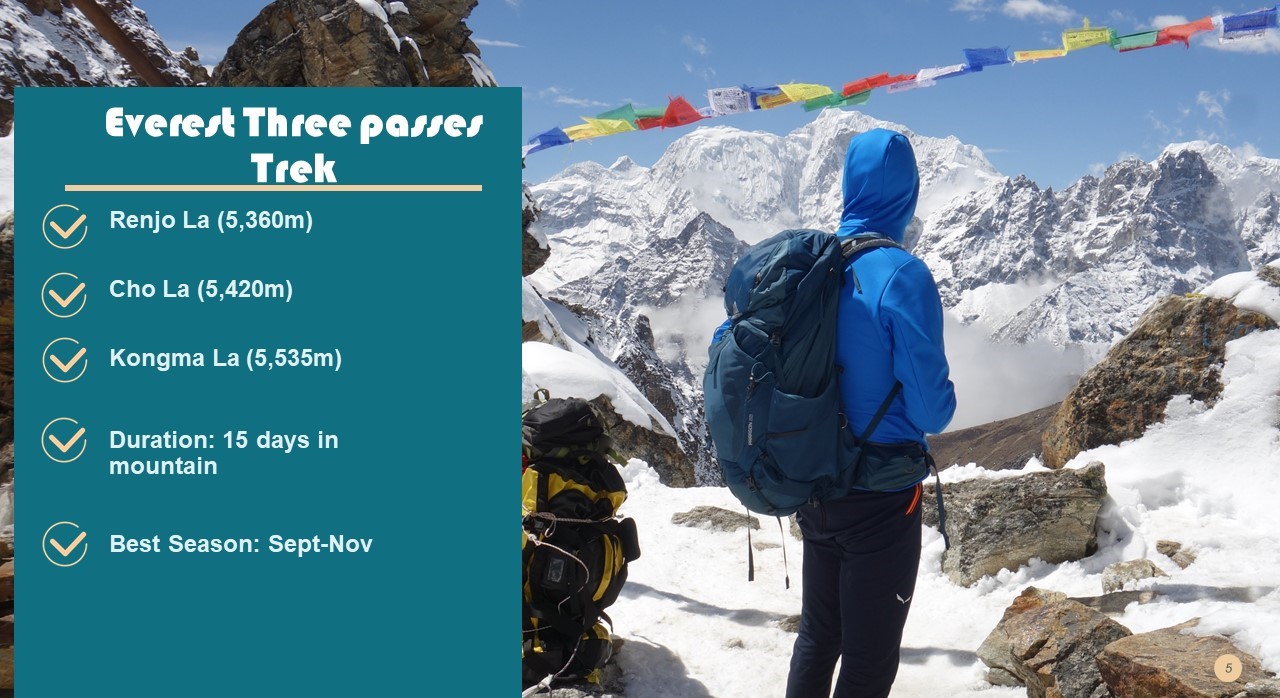
The Everest Three High Passes refer to three challenging mountain passes located in the Khumbu region of Nepal, which is part of the Everest trekking route. These passes are typically part of the Everest Three Passes Trek, a high-altitude trek that takes you through rugged terrain, remote villages, and stunning Himalayan landscapes. The three passes are:
1: Renjo La Pass (5,360m / 17,590ft):
The first high pass, Renjo La, connects the Gokyo Valley with the Thame Valley. It offers spectacular views of Everest, Lhotse, Makalu, and other peaks. The pass itself is quite steep, making it a challenging crossing for trekkers.
2: Cho La Pass (5,420m / 17,782ft):
Cho La connects the Gokyo Valley with the Khumbu Valley. It is known for its challenging terrain, including glaciers and ice fields. The pass offers incredible panoramic views, including views of Mount Everest, Lhotse, and other notable peaks in the region.
3: Kongma La Pass (5,535m / 18,159ft):
The third and highest of the three passes, Kongma La connects the Khumbu Valley to the Everest Base Camp area. It’s a physically demanding pass due to the altitude and steep terrain, but the views it offers, including the towering peaks of the Himalayas, make it an unforgettable experience for trekkers.
The Everest Three High Passes Trek is a dream for many adventurers, and Adventure Fourteen Summit organises this extraordinary journey every season. This challenging and scenic trek takes you over three high mountain passes, and it also includes treks to Gokyo Ri and Everest Base Camp.
Our team provides full support, including experienced high-altitude guides who are experts in navigating rugged terrain and ensuring your safety every step of the way. You’ll trek through remote valleys, charming villages, and the world’s highest landscapes, offering breathtaking views of iconic peaks such as Mount Everest, Lhotse, Makalu, and Cho Oyu.
Whether you’re planning a spring, summer, autumn, or winter adventure, we’re ready to guide you through this incredible journey. With our team ensuring the highest level of support, your trek to Everest Base Camp and beyond will be safe, enjoyable, and unforgettable. Join us for an unparalleled Himalayan experience!
Three Passes Trek
The Journey Begins:
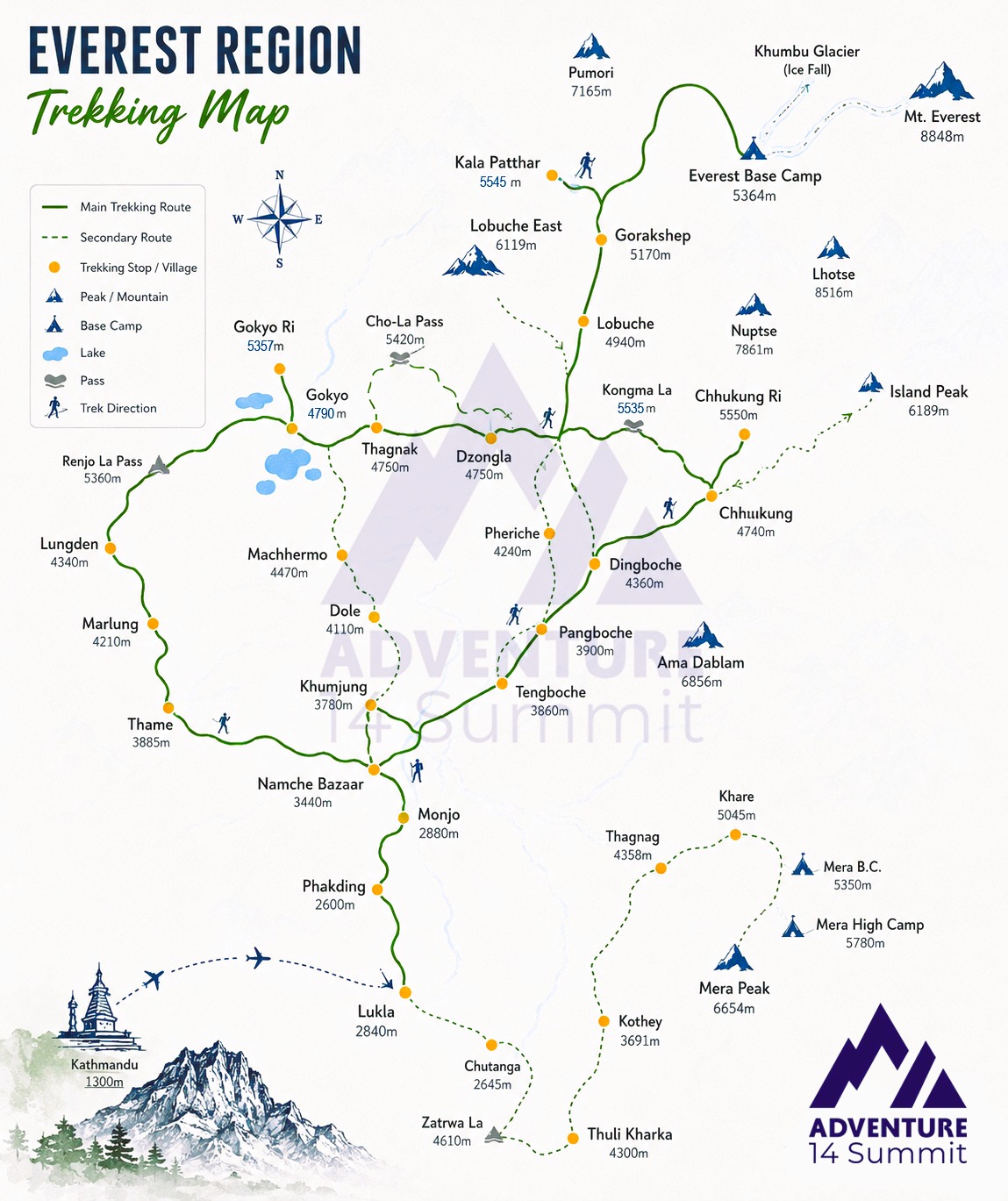
The Everest Three High Passes Trek begins with a flight to Lukla and a trek to Namche Bazaar. From there, the route splits to Thame. After crossing the first pass, the trail descends to Gokyo Lake, where you join the Gokyo Valley route. You’ll then cross the second pass, Cho La, before trekking toward Lobuche. From Lobuche, you connect to the Everest Base Camp route. After visiting Everest Base Camp, you return to Lobuche and finally cross the third pass, Kongma La. Then, we follow the way back down to Namche and Lukla.

Best Season for Three High Passes
Spring Season (March to May):
Weather: Spring is considered the best season for the Everest Three Passes trek. The weather is stable, with clear skies and moderate temperatures, making trekking conditions ideal. Days are generally warmer, and nights are still cold, ensuring that the snow on the passes has melted enough to avoid overly icy conditions.
Conditions of the Three Passes:
1: Renjo La Pass (5,360m):
The path is often snow-covered, but the snow is usually not deep, making it easier to cross with crampons.
2: Cho La Pass (5,420m):
Often covered in snow, but the snow levels are manageable. The pass is typically passable in the spring, but some sections might be icy, requiring additional caution and gear.
3: Kongma La Pass (5,535m):
This pass is steep and may still have some snow accumulation, but it’s more manageable in spring with the right equipment. The weather is generally stable, and the pass remains open for trekking.
Autumn Season (September to November)
Weather: After the summer monsoon, autumn offers clear skies and stable weather conditions. This is the second most popular season for the trek. While temperatures drop as the season progresses, they are still manageable, especially in early autumn.
Conditions of the Three Passes:
1: Renjo La Pass:
By autumn, the snow has usually melted, making the crossing safer, though it can still be icy and challenging in places.
2: Cho La Pass:
The path is usually clear, but the pass is often covered in snow, especially later in the season. Early autumn is typically the best time to cross before snow accumulates.
3: Kongma La Pass:
Like the other passes, Kongma La is typically free of excessive snow early in the season, but later in autumn, it can be covered with snow, making it a more challenging and strenuous crossing.
Everest Three High Passes Trek: Duration, Walking Hours, and Difficulty
1: Duration of the Trek:
The Everest Three High Passes Trek typically spans 15 days in the mountains. This includes time for acclimatisation, trekking, and exploring key landmarks.
2: Walking Hours in the Trek:
On average, trekkers will spend 5 to 8 hours per day walking, depending on the stage of the trek. Some days may involve longer walks, particularly when crossing high passes like Renjo La, Cho La, and Kongma La. The walking hours may vary based on fitness, pace, and weather conditions.
3: Difficulty of the Trek:
The Everest Three High Passes Trek is considered a challenging trek suitable for experienced trekkers. It requires good fitness levels and the ability to handle long trekking days at high altitudes.
HIGHLIGHTS OF EVEREST THREE HIGH PASSES
 Meet Our Expert
TEMBA SHERPA
Meet Our Expert
TEMBA SHERPA
All Inclusive Price.
$
1950
Best
GuaranteeValue


Itinerary
👉: When you arrive at Tribhuvan International Airport, you must follow a few formal requirements to receive the Nepal entry visa at the immigration office. Our office representatives will welcome you outside the terminal hall and transfer you to the hotel. brief you about tomorrow’s activities and collect any documents our office requires.
ACCOMODATION
3 star hotel
MAX ALTITUDE
1,350 m/4430 ft.
MEALS
B/B
👉: On the second day, we will complete all necessary formalities, such as obtaining the required paperwork, permits, and other documentation needed for our trek, and we will begin making preparations for it. There will be briefings covering every aspect of the three high passes trek, including equipment, trip duration, lodging options, and other relevant details. This day also provides an opportunity to interact with and get to know your trekking companions and team members.
ACCOMODATION
3 Star hotel
MAX ALTITUDE
1,350 m/4430 ft.
MEALS
B/B
👉: We take an early morning flight to Lukla, where all Everest region treks begin. Once you arrive in Lukla, have breakfast at the lodge and prepare your luggage for the porters. The trek to Phakding begins with some ups and downs, along with numerous prayer rocks (Mani, in the local language). After settling into your lodge in Phakding, you can take a short walk to explore the village.
ACCOMODATION
Lodge
MAX ALTITUDE
2,651 m/8697 ft.
MEALS
BLD
👉: Our trail passes through a pine forest as we continue walking north along the Benkar Valley. We cross the Dudh Koshi River and pass through the villages of Chumoa and Monjo before reaching the entrance of Everest National Park. After crossing a suspension bridge, we pass through Jorsale village and walk alongside the Dudh Koshi and Bhote Koshi rivers. Finally, we ascend a steep trail to reach Namche Bazaar, the largest town in the Everest region.
ACCOMODATION
Lodge
MAX ALTITUDE
3440 m/11286 ft.
MEALS
BLD
👉: We can explore Namche Bazaar, the main town of the Everest or Khumbu region. A hike to the Everest View Hotel offers breathtaking views of the sunrise over the Himalayas, including Mt. Everest, Lhotse, Nuptse, Ama Dablam, Thamserku, Kongde, and more. For those interested in a day hike, we can trek to Khumjung village. Additionally, we will visit the Hillary School and a monastery that houses a yeti’s scalp.
ACCOMODATION
Lodge
MAX ALTITUDE
3440 m/11286 ft.
MEALS
BLD
👉: The trek to Thame (3,800 meters / 12,467 feet) typically takes around 3 to 4 hours, depending on your pace. The trail from Namche Bazaar (3,440 meters) to Thame follows a relatively gradual ascent, offering beautiful views of the surrounding mountains and a chance to experience the local Sherpa culture. The route takes you through villages, forests, and rivers, with some parts offering stunning panoramas of peaks like Everest, Lhotse, and Ama Dablam.
ACCOMODATION
Lodge
MAX ALTITUDE
3800 m/12467 ft.
MEALS
BLD
👉: The trek to Lumde (4,137m/13,572ft) takes about 4–5 hours, passing through varied terrain with scenic mountain views. The trail includes gradual ascents and occasional steep sections. It’s crucial to maintain a steady pace and take breaks to acclimatize and hydrate. Enjoy the beautiful surroundings and rest upon arrival to prepare for the next part of your journey.
ACCOMODATION
Lodge
MAX ALTITUDE
4137 m/13572 ft.
MEALS
BLD
👉: The trek to Gokyo (4,800m/15,748ft) via Renjo La Pass (5,380m) takes about 8 hours. This challenging stretch involves a steep ascent to Renjo La, offering breathtaking panoramic views of the surrounding peaks. After crossing the pass, you’ll descend to Gokyo, where you can rest and enjoy the stunning Gokyo Valley. Be prepared for the high altitude and take regular breaks to manage your energy.
ACCOMODATION
Lodge
MAX ALTITUDE
4800 m/15748 ft.
MEALS
BLD
👉: A rest day in Gokyo (4,800m/15,748ft) allows for vital acclimatization and recovery. You can relax and explore the picturesque Gokyo Valley, with its turquoise lakes and stunning mountain views. Optional activities include hiking to Gokyo Ri (5,357m) for panoramic views of Everest, Lhotse, and Makalu. This day helps your body adjust to the altitude and prepares you for the next leg of the trek. Be sure to stay hydrated and rest well to maintain energy for upcoming challenges.
ACCOMODATION
Lodge
MAX ALTITUDE
4800 m/15748 ft.
MEALS
BLD
ACCOMODATION
Lodge
MAX ALTITUDE
4750 m/1583 ft.
MEALS
BLD
👉: The trek to Dzongla via Cho La Pass (5,367m) to Lobuche (4,900m/12,795ft) takes 7-8 hours. It’s a challenging day, starting with a steep ascent to Cho La Pass, where you’ll be rewarded with panoramic views of the surrounding peaks. After crossing the pass, you’ll descend toward Dzongla before continuing to Lobuche. The high altitude requires careful pacing and regular breaks to manage energy and avoid altitude sickness. Once in Lobuche, you can rest and prepare for the upcoming trek toward Everest Base Camp.
ACCOMODATION
Lodge
MAX ALTITUDE
5367 m | 4900 m/12795 ft.
MEALS
BLD
👉: The trail to Gorak Shep is not too difficult but involves crossing a glacier path with uneven terrain and loose gravel, so sturdy hiking boots are crucial. As you approach Gorak Shep, look for meltwater patterns on the Khumbu Glacier and unique rounded ice towers.
Upon reaching Gorak Shep, take a short rest, eat, and drink. Then, continue your walk to Everest Base Camp, a major highlight with stunning views of Nuptse, Khumbutse, and Pumori. Take time to admire the grandeur of Everest. Afterward, retrace your steps to Gorak Shep, where you’ll experience the peacefulness of the Himalayas.
ACCOMODATION
Lodge
MAX ALTITUDE
5,160 m/16929 ft.
MEALS
BLD
👉: The trek up to Kala Patthar (5,545m/18,192ft) and then to Lobuche takes 6-7 hours. Starting with the ascent to Kala Patthar, you’ll be rewarded with stunning views of Everest and the surrounding peaks. After soaking in the views, you’ll descend and continue the trek back to Lobuche. The altitude can make the trek challenging, so it’s important to take your time and stay hydrated. This day combines a high-altitude climb with a descent, providing a memorable experience in the Everest region.
ACCOMODATION
Lodge
MAX ALTITUDE
5545 m/18192 ft.
MEALS
BLD
👉: The trek to Dingboche (4,760m) via Kongma La Pass (5,350m/17,552ft) takes 6-7 hours. It’s a challenging day, starting with a steep ascent to Kongma La Pass, offering spectacular views of the surrounding peaks. After crossing the pass, you’ll descend towards Dingboche, a beautiful village where you can rest and acclimatize. The high altitude and rugged terrain make this a demanding trek, so be sure to pace yourself and take breaks as needed.
ACCOMODATION
Lodge
MAX ALTITUDE
4760 m | 5350 m/17552 ft.
MEALS
BLD
👉: The trek to Namche Bazaar (3,440m/11,286ft) takes 7-8 hours. This is a scenic and moderate trek, with some challenging ascents and descents along the way. As you approach Namche, you’ll be greeted by stunning views of the surrounding mountains. Namche Bazaar is a vibrant hub for trekkers, offering a chance to rest, acclimatize, and explore the local shops and cafes. Be sure to pace yourself and take breaks to adjust to the altitude.
ACCOMODATION
Lodge
MAX ALTITUDE
3,867 m/12687 ft.
MEALS
BLD
👉: The trek to Lukla (2,860m/9,383ft) takes 6-7 hours, descending through picturesque trails with views of the valley and surrounding landscapes. The trail is mostly downhill, passing through forests, suspension bridges, and Sherpa villages. As you approach Lukla, you’ll gradually descend to the lower altitudes. Once in Lukla, you can rest and prepare for your return flight or the next phase of your adventure.
ACCOMODATION
Lodge
MAX ALTITUDE
3440 m/11286 ft.
MEALS
BLD
👉: Fly to Munthali (1,450m) in 20 minutes, followed by a drive back to Kathmandu. The short flight offers scenic views, while the drive from Munthali to Kathmandu typically takes several hours, depending on road conditions. It’s a relaxing way to end your trek before returning to the city for rest and further travel preparations.
ACCOMODATION
Lodge
MAX ALTITUDE
2,800 m/9186 ft.
MEALS
BLD
👉: After completing your trek and journey in Nepal, you will have your final departure back to your country. Depending on your flight schedule, you may have some free time in Kathmandu to explore or relax before heading to the airport for your international flight. Safe travels and best wishes for your future adventures!
Cost Include
- Airport pickup & drop-off in private transport
- 3 nights’ hotel accommodation in Kathmandu (Bed & Breakfast plan)
- Domestic flights: Kathmandu–Lukla–Kathmandu
- Sagarmatha National Park & Khumbu Pasang Lhamu Rural Municipality permit
- Accommodation in tea houses/lodges during the trek
- Three meals per day (breakfast, lunch, dinner) during the trek
- Experienced, English-speaking trekking guide
- Porters to carry luggage (2 trekkers = 1 porter, max 20–25 kg)
- Staff wages, insurance, and necessary equipment
- First aid kit and oxygen cylinder for emergencies
- Adventure Fourteen Summit T-shirt, cap, and duffel bag for the trek
Cost Exclude
- International flights to/from Nepal
- Nepal visa fee (USD 50 for 30 days, on arrival)
- Personal trekking gear and clothing
- Meals in Kathmandu (except breakfast)
- Personal travel and rescue insurance (mandatory)
- Tips for guides, porters, and staff
- Extra hotel nights due to early return or itinerary changes
- Personal expenses (snacks, drinks, internet, hot showers, etc.)
FIXED DEPARTURE DATE OF THREE HIGH PASSES
| Start | Finish | Availability | Price | |
|---|---|---|---|---|
| September 4, 2026 | Trip Status available | Starting from $ 1950 | Book Now | |
| September 26, 2026 | Trip Status available | Starting from $ 1950 | Book Now | |
| October 2, 2026 | Trip Status available | Starting from $ 1950 | Book Now | |
| November 8, 2026 | Trip Status available | Starting from $ 1950 | Book Now | |
| March 3, 2027 | Trip Status available | Starting from $ 1950 | Book Now | |
| April 8, 2027 | Trip Status available | Starting from $ 1950 | Book Now | |
| May 9, 2027 | Trip Status available | Starting from $ 1950 | Book Now |
Map
Reviews
EVEREST THREE HIGH PASSES TREK
I was with Temba and his Adventure 14 summit company on EBC trekking via Gokyo Lake, Chola Pass and Lobuche Peak. Temba (The Himalayan Sherpa) is the best Sherpa and Guide in the Nepal. Fully engaged from start to the end of the trip. He has very big knowledge about climbing, history and culture of Nepal. You can feel very safe with him. No hidden cost. I fully recommend Adventure 14 Summit
Meet Our Expert
TEMBA SHERPA
All Inclusive Price.
$
1950
Best
GuaranteeValue
𝗪𝗘'𝗗 𝗟𝗢𝗩𝗘 𝗧𝗢 𝗛𝗔𝗩𝗘 𝗔 𝗖𝗛𝗔𝗧
"𝗜𝗳 𝘆𝗼𝘂'𝗿𝗲 𝗶𝗻𝘁𝗲𝗿𝗲𝘀𝘁𝗲𝗱 𝗶𝗻 𝗱𝗶𝘀𝗰𝘂𝘀𝘀𝗶𝗻𝗴 𝘆𝗼𝘂𝗿 𝗻𝗲𝘅𝘁 𝗮𝗱𝘃𝗲𝗻𝘁𝘂𝗿𝗲, 𝗻𝗲𝗲𝗱 𝗮𝘀𝘀𝗶𝘀𝘁𝗮𝗻𝗰𝗲 𝘄𝗶𝘁𝗵 𝗽𝗹𝗮𝗻𝗻𝗶𝗻𝗴, 𝗼𝗿 𝘀𝗶𝗺𝗽𝗹𝘆 𝘄𝗮𝗻𝘁 𝘁𝗼 𝗵𝗮𝘃𝗲 𝗮 𝗰𝗵𝗮𝘁 𝗮𝗯𝗼𝘂𝘁 𝗮𝗻𝘆 𝘁𝗼𝗽𝗶𝗰, 𝗳𝗲𝗲𝗹 𝗳𝗿𝗲𝗲 𝘁𝗼 𝗮𝘀𝗸 𝗺𝗲 𝗮𝗻𝘆𝘁𝗵𝗶𝗻𝗴 𝗵𝗲𝗿𝗲. 𝗜'𝗺 𝗺𝗼𝗿𝗲 𝘁𝗵𝗮𝗻 𝗵𝗮𝗽𝗽𝘆 𝘁𝗼 𝗵𝗲𝗹𝗽 𝗶𝗻 𝗮𝗻𝘆 𝘄𝗮𝘆 𝗜 𝗰𝗮𝗻!"
+𝟵𝟳𝟳-𝟬𝟭𝟱𝟵𝟮𝟬𝟴𝟵𝟵 | +𝟵𝟳𝟳 𝟵𝟴𝟰𝟭𝟯𝟭𝟲𝟯𝟵𝟮
WANT TO CUSTOMIZE YPUR OWN TRIP
PLANNING A TRIP ?
"𝗪𝗲 𝗵𝗮𝘃𝗲 𝗮 𝘁𝗲𝗮𝗺 𝗼𝗳 𝗲𝘅𝗽𝗲𝗿𝗶𝗲𝗻𝗰𝗲𝗱 𝘁𝗿𝗮𝘃𝗲𝗹 𝗲𝘅𝗽𝗲𝗿𝘁𝘀 𝘄𝗵𝗼 𝗵𝗮𝘃𝗲 𝗯𝗲𝗲𝗻 𝘄𝗼𝗿𝗸𝗶𝗻𝗴 𝗶𝗻 𝘁𝗵𝗶𝘀 𝗶𝗻𝗱𝘂𝘀𝘁𝗿𝘆 𝗳𝗼𝗿 𝗼𝘃𝗲𝗿 𝗮 𝗱𝗲𝗰𝗮𝗱𝗲. 𝗙𝗲𝗲𝗹 𝗳𝗿𝗲𝗲 𝘁𝗼 𝗰𝗼𝗻𝘀𝘂𝗹𝘁 𝘄𝗶𝘁𝗵 𝘂𝘀 𝘁𝗼 𝗴𝗲𝘁 𝘀𝘁𝗮𝗿𝘁𝗲𝗱 𝗼𝗻 𝘆𝗼𝘂𝗿 𝗻𝗲𝘅𝘁 𝗮𝗱𝘃𝗲𝗻𝘁𝘂𝗿𝗲!"


© Copyright Adventure 14 Summit Expedition.