Good to Know
lOCATION
Khumbu Region
TRIP TYPE
Peak Climbing
TRANSPORTATION
Flight and Drive
ARRIVAL ON
kathmandu
DEPARTURE FROM
Kathmandu
Maximum Altitude:
6119 meter to 6812 meter
GROUP SIZE
+1
ACCOMMODATION
Tea house | Lodge and Tent
LOBUCHE EAST PEAK & AMA DABLAM
The Ultimate Double Challenge
Embark on a thrilling Himalayan adventure by combining Lobuche East Peak (6,119 m) with the majestic Ama Dablam (6,812 m). This expedition is designed for climbers seeking a mix of technical challenges, altitude acclimatisation, and some of the most awe-inspiring landscapes in Nepal’s Khumbu region.
Why This Combination?
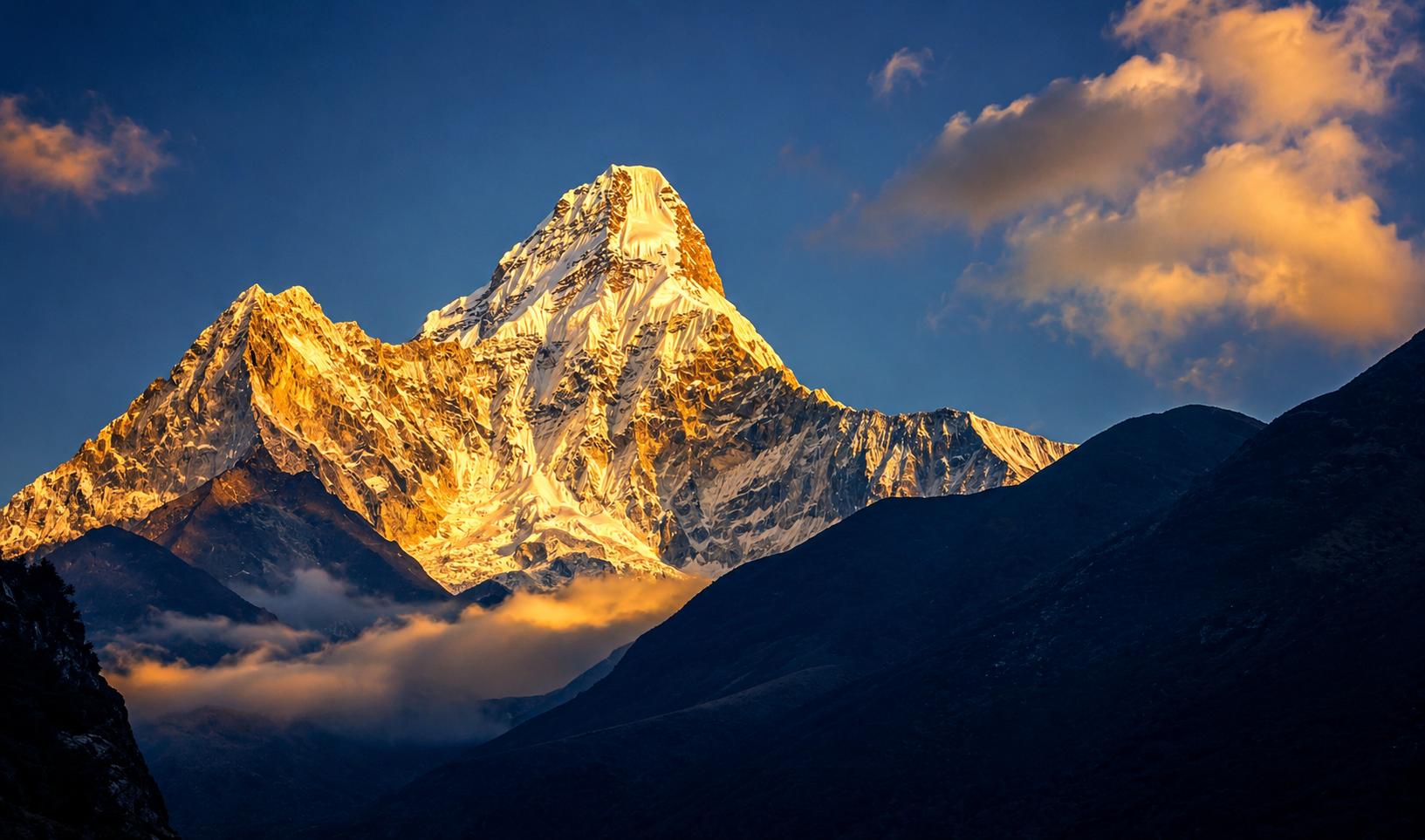
Starting with Lobuche East allows climbers to gradually adapt to high altitude while honing essential alpine skills. This trekking peak provides a perfect introduction to steep ice and rock sections, crevasse navigation, and high-altitude endurance. Once summited, climbers turn their attention to Ama Dablam—famously dubbed the “Matterhorn of the Himalayas”—known for its striking ridges and demanding technical climbs.
Together, these peaks offer a diverse mountaineering experience that prepares climbers for future 7,000 m and 8,000 m expeditions, including Baruntse, Himlung, and even Mount Everest.
A Brief History of the Peaks
Lobuche East was officially first climbed in 1984 by Laurence Nielson and Sherpa Ang Gyalzen. While the surrounding region had long been explored during Everest expeditions, Lobuche East stands out as a highly accessible NMA Group B trekking peak, ideal for both preparation and adventure.
Ama Dablam saw its first ascent in 1961 by a New Zealand team led by Mike Gill and Barry Bishop, with the summit reached by Mike Gill, Wally Romanes, Mike Ward, and Sherpa Mingma Tsering. Its standard Southwest Ridge route has become a benchmark for technical Himalayan climbing, attracting mountaineers worldwide.
Personalized
Guide-to-Client Options
Choosing the right guide-to-client ratio is critical for safety and success:
A: 1:1 Ratio (One Guide per Climber): Offers the highest level of support, ensuring climbers receive personalised attention and immediate assistance on technical sections—ideal for those new to alpine climbing.
B: 1:2 Ratio (One Guide for Two Climbers): Commonly used for experienced teams, balancing safety with efficiency while maintaining support on challenging terrain.
C: 1:3–4 Ratio (One Guide for Three to Four Climbers): Suitable for highly skilled and independent climbers, allowing the guide to oversee the team while providing technical guidance when needed.
This expedition is more than just a climb—it’s a complete Himalayan experience, combining skill development, breathtaking scenery, and the satisfaction of conquering two of Nepal’s most iconic peaks.
Lobuche Peak and Ama Dablam
Technical Challenges
Lobuche Peak (6,119m)
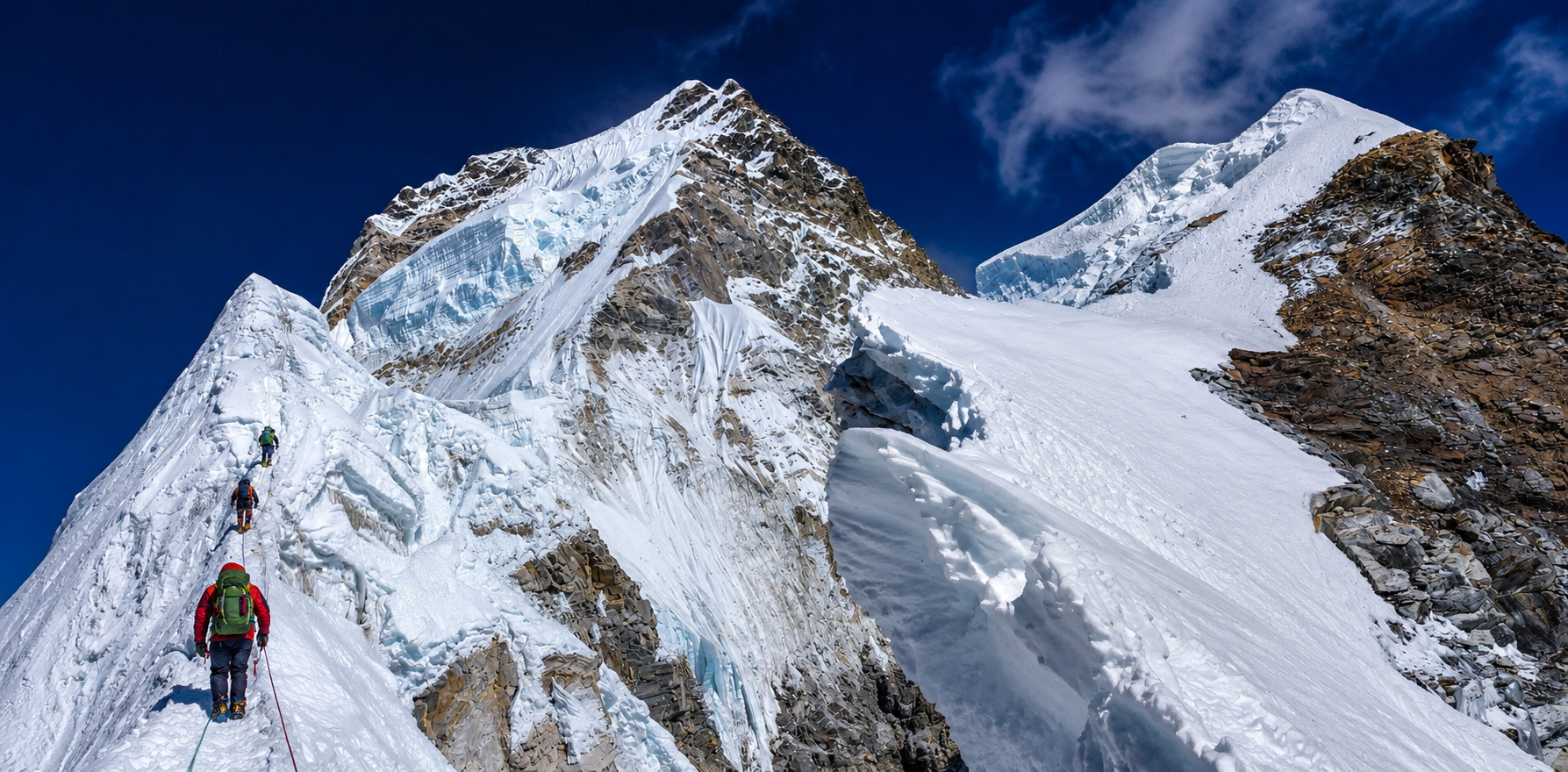
Lobuche Peak, often classified as a trekking peak, offers far more than a simple hike. Its mixed terrain, encompassing snow, ice, and rocky sections, presents real technical challenges that demand more than just basic trekking experience. Climbers need to be proficient with mountaineering essentials such as crampons and ice axes, and should be comfortable navigating glaciers and steep snow slopes.
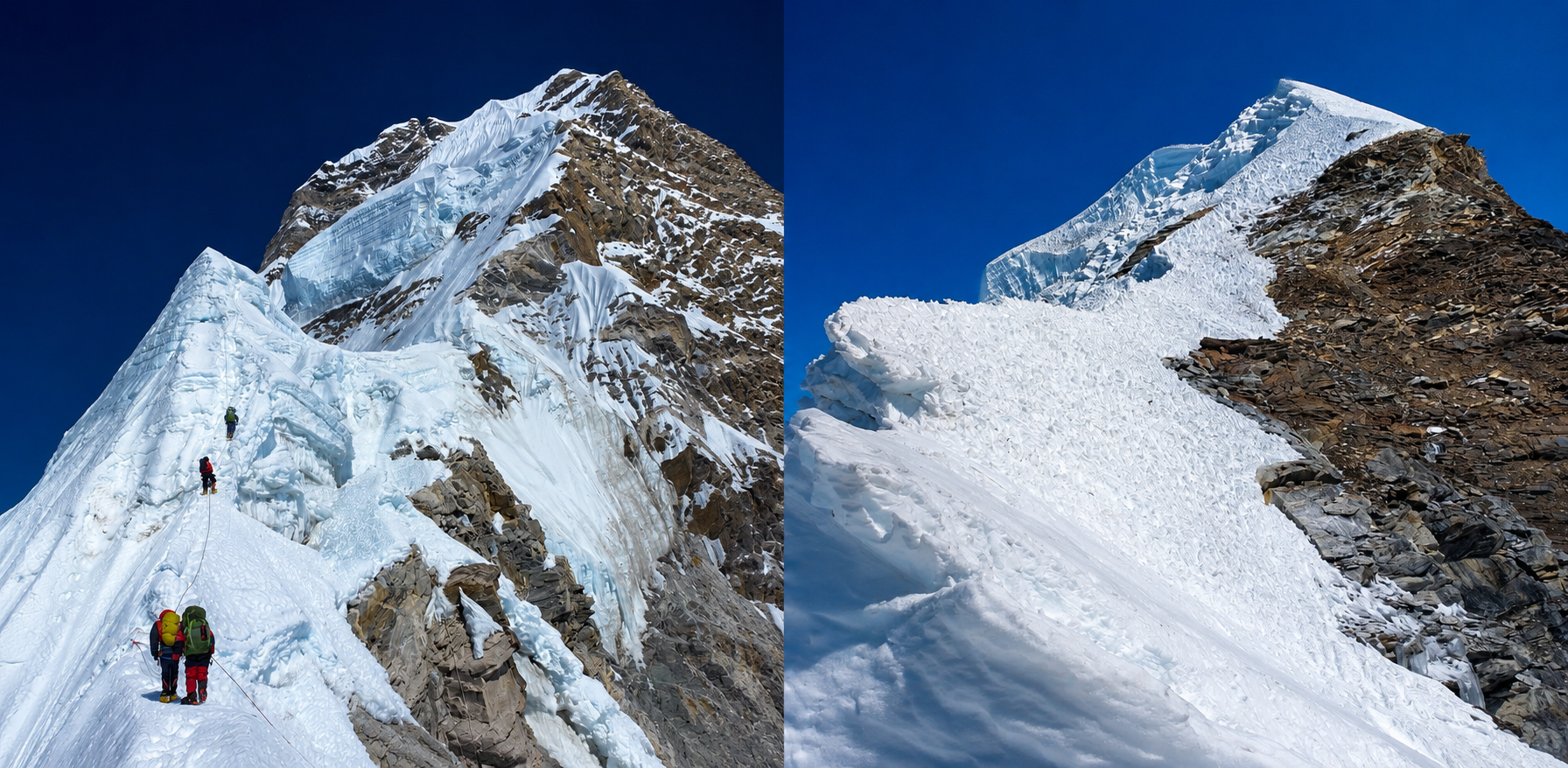
The ascent to the summit gradually increases in difficulty, with steeper snow slopes and ridges near the top. While fixed ropes are installed on the trickiest sections to assist climbers, the climb still requires careful attention to high-altitude exposure, rapidly changing weather, and glacier navigation. Although less technically demanding than some of the Himalaya’s giant peaks, Lobuche Peak rewards preparation, skill, and endurance.
Lobuche East Peak
Camp Elevations
Lobuche Base Camp – 4,950 meters (16,240 feet)
Situated beneath the terminal moraine of the Lobuche Glacier near the village of Lobuche, Base Camp serves as the traditional starting point. Many climbers today choose to bypass Base Camp and proceed directly from Lobuche village to High Camp due to the manageable distance.
Lobuche High Camp – 5,400 meters (17,716 feet)
High Camp is strategically placed to reduce the distance of the final summit push. The hike from Base Camp involves moderately steep terrain with rocky and occasionally icy patches. While not technically difficult, the altitude and the need to carry equipment make this stage physically demanding.
Lobuche East Summit – 6,119 meters (20,075 feet)
The summit represents the pinnacle of any Lobuche expedition. Climbers typically begin the final push very early in the morning (around 2–3 AM) from High Camp. The route involves glacier travel, steep snow and ice slopes, and navigating crevasses. Fixed ropes are installed on the more vertical summit ridge sections to ensure safety during the climb. Reaching the top requires both physical endurance and careful technical execution.

Ama Dablam (6812m)
Ama Dablam is one of the most striking and technically demanding peaks in the Himalayas. Its steep rock and ice faces, narrow ridges, and the notorious Hanging Glacier require advanced mountaineering skills. Climbers must be proficient in rock, ice, and mixed climbing, with experience in using fixed ropes, placing protection, and managing anchors. The exposed summit ridge demands balance, precision, and confidence, making Ama Dablam a true test of technical ability and high-altitude endurance.
Expedition Camp Overview
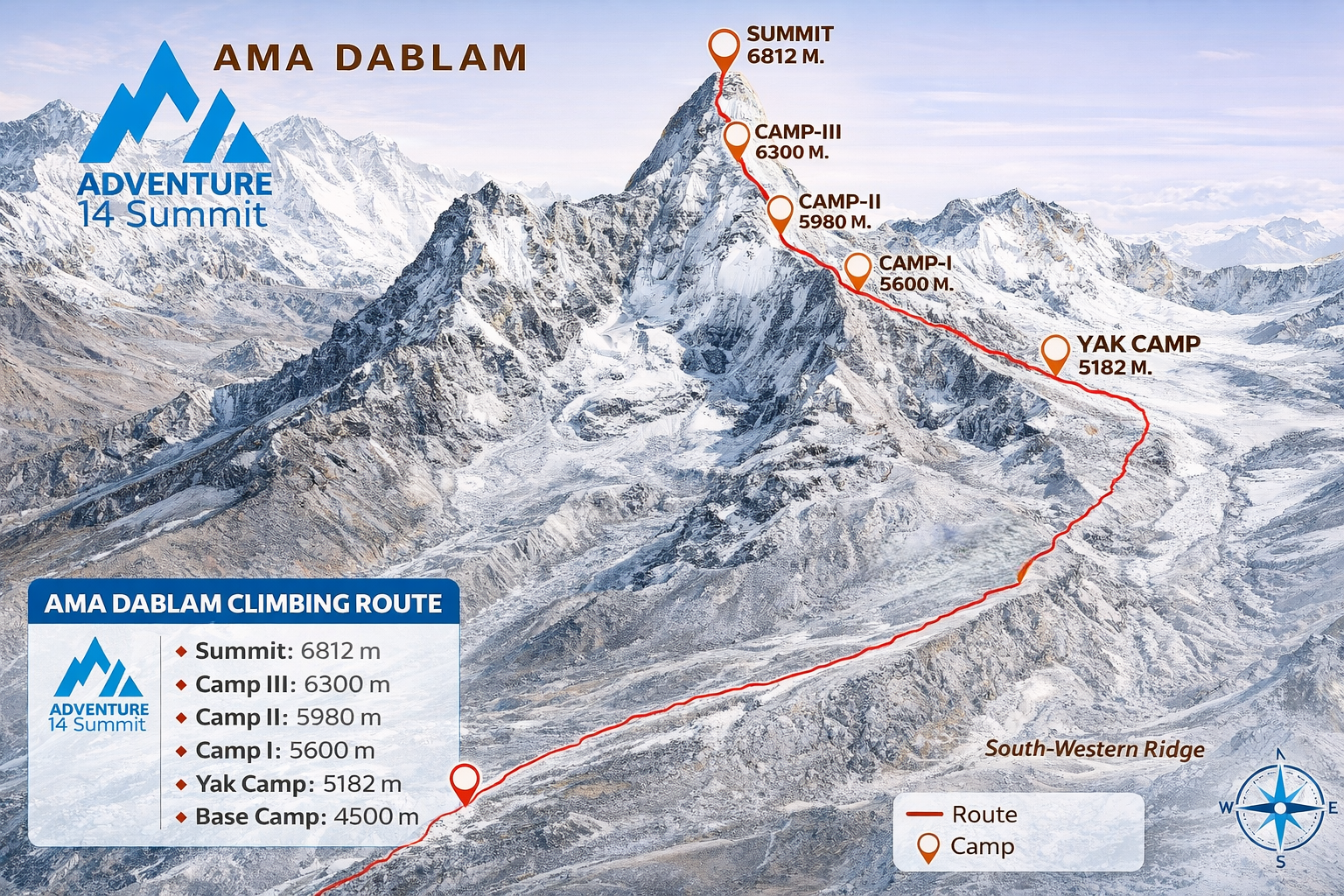
A: Base Camp (BC) – 4,570 m / 15,000 ft
Nestled in a scenic meadow with stunning views of Ama Dablam’s Southwest Ridge, BC serves as the starting point for acclimatization and climbing rotations.
B: Advanced Base Camp (ABC) – 5,400 m / 17,700 ft (optional)
Some expeditions establish ABC below the SW ridge to reduce the climb to Camp 1, though not all teams use this stop.
1: Camp 1 (C1) – 5,800 m / 19,028 ft
Located on a rocky ridge with limited tent space, the route to C1 involves rock scrambling and fixed ropes. Climbers gain critical experience in technical climbing here.
2: Camp 2 (C2) – 5,900 m / 19,357 ft
Positioned just below the famous Yellow Tower, C2 is exposed but offers breathtaking views. Space is limited, making careful planning essential.
3: Camp 3 (C3) – 6,300 m / 20,669 ft
Situated below the Dablam hanging glacier, this camp is more prone to icefall hazards. Experienced climbers sometimes bypass C3 for a direct push from C2 to the summit.
4: Summit – 6,812 m / 22,349 ft
The final ascent involves steep snow and ice slopes, culminating in panoramic views of Everest, Lhotse, Makalu, and the surrounding Khumbu peaks. Reaching the summit of Ama Dablam is a true alpine achievement, rewarding climbers with unparalleled Himalayan vistas.
Lobuche East Peak & Ama Dablam Expedition –
Full Board and Base Camp Service
Adventure Fourteen Summit offers comprehensive expedition packages for climbers aiming to conquer Lobuche East Peak alongside the majestic Ama Dablam. Our services are designed to meet different needs and experience levels:
A: Full Board Service
This all-inclusive package covers every aspect of your journey—from arrival in Nepal to your descent after the summit. It includes:
1: Climbing permits and administrative requirements
2: Transportation within Nepal
3: Accommodation and meals throughout the expedition
4: Expert guides and experienced porters
5: Supplementary oxygen for high-altitude support
6: Complete climbing logistics up to the summit
B: Base Camp Service
Perfect for climbers who wish to manage the summit push independently. This package provides support up to Base Camp and includes:
1: Permits and administrative support
2: Transportation
3: Accommodation and meals at Base Camp
4: Full base camp facilities
At Adventure Fourteen Summit, your safety and success are our top priorities. Our Lobuche and Ama Dablam expeditions are structured with multiple acclimatisation rotations between Base Camp and higher camps, allowing climbers to adapt safely to high altitudes and maintain peak health throughout the climb.
We also offer flexible summit windows, based on weather conditions and team readiness, maximising your chances to reach the top.
All expeditions are led by licensed, expert guides with years of experience summiting Lobuche East, Ama Dablam, and other 8,000-meter peaks. From technical guidance to strategic decision-making, our team ensures a safe, well-organised, and rewarding journey.
With transparent pricing and full expedition support, Adventure Fourteen Summit is your trusted partner for turning the dream of summiting Lobuche East Peak and Ama Dablam into reality.
Join us for an unforgettable Himalayan adventure and make your high-altitude dream come true!
LOBUCHE PEAK (6119M) WITH AMA DABLAM (6812M)
 Meet Our Expert
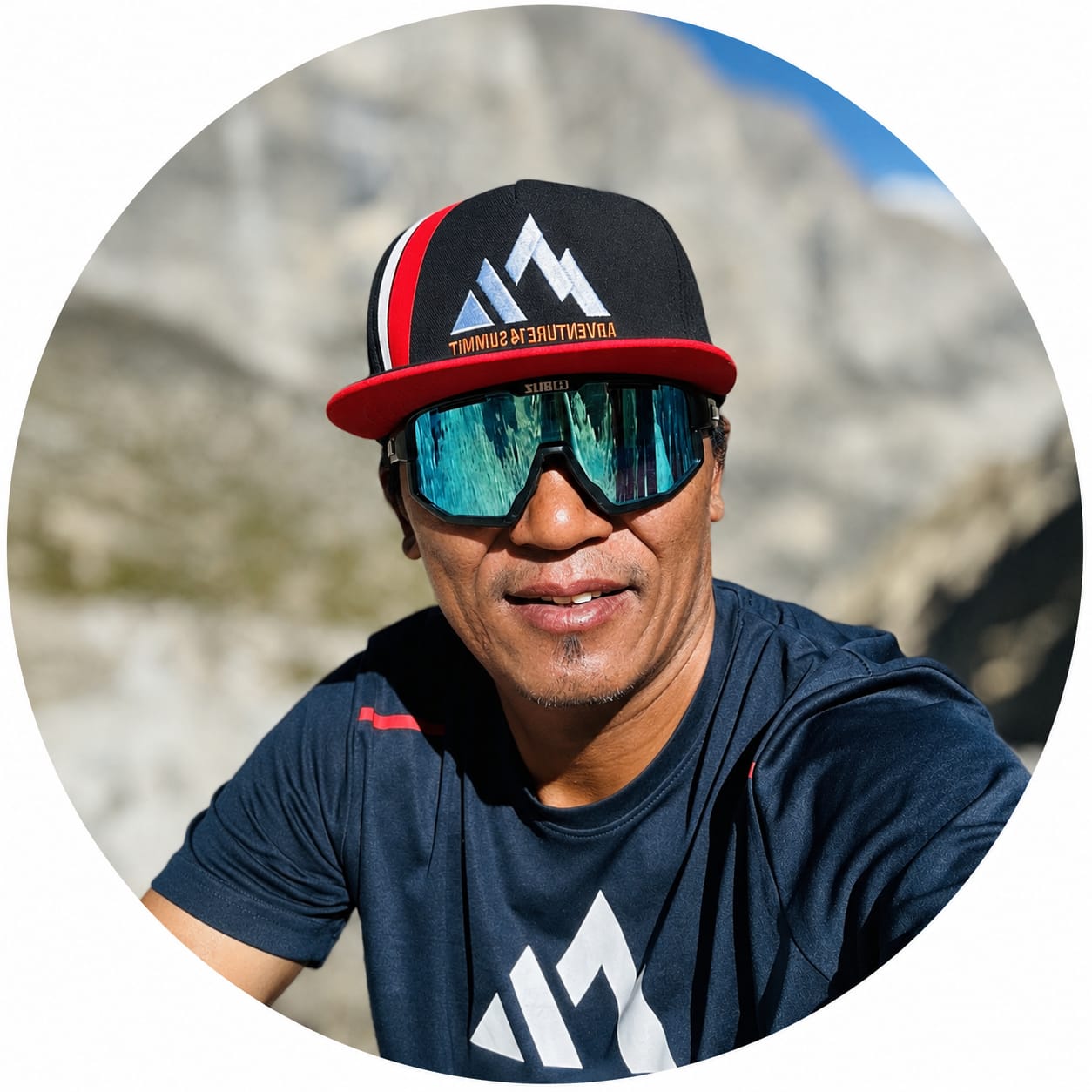
TEMBA SHERPA
Meet Our Expert
TEMBA SHERPA
All Inclusive Price.
$
0
Best
GuaranteeValue
TRIP BOOKING FORM
- Clear Passport Copy: Ensure the passport is valid for at least six months
- Passport-Sized Photographs: Ensure the photos are in color.
- International Flight Details: Include arrival and departure details, airline name, flight number, and ticket confirmation.
- Emergency Medical Information: Submit proof of travel insurance covering high-altitude trekking and medical evacuation.
Itinerary
👉: When you arrive at Tribhuvan International Airport, you must follow a few formal requirements to receive the Nepal entry visa at the immigration office. Our office representatives will welcome you outside the terminal hall and transfer you to the hotel. brief you about tomorrow’s activities and collect any documents our office requires.
ACCOMODATION
3 Star Hotel
MAX ALTITUDE
1350 m
MEALS
B|B
👉: On the second day, we will complete all necessary formalities, such as obtaining the required paperwork, permits, and other documentation needed for our trek, and we will begin making preparations for it. There will be briefings covering every aspect of the lobuche peak, including equipment, trip duration, lodging options, and other relevant details. This day also provides an opportunity to interact with and get to know your climbing companions and team members.
ACCOMODATION
3 Star hotel
MAX ALTITUDE
1450 M
MEALS
Bed and Break Fast
👉: We take an early morning flight to Lukla, where all Everest region treks begin. Once you arrive in Lukla, have breakfast at the lodge and prepare your luggage for the porters. The trek to Phakding begins with some ups and downs, along with numerous prayer rocks (Mani, in the local language). After settling into your lodge in Phakding, you can take a short walk to explore the village.
ACCOMODATION
Lodge
MAX ALTITUDE
2,651 m/8,697 ft
MEALS
BLD
👉: Our trail passes through a pine forest as we continue walking north along the Benkar Valley. We cross the Dudh Koshi River and pass through the villages of Chumoa and Monjo before reaching the entrance of Everest National Park. After crossing a suspension bridge, we pass through Jorsale village and walk alongside the Dudh Koshi and Bhote Koshi rivers. Finally, we ascend a steep trail to reach Namche Bazaar, the largest town in the Everest region.
ACCOMODATION
Lodge
MAX ALTITUDE
3,440 m/11,286 ft
MEALS
BLD
👉: We can explore Namche Bazaar, the main town of the Everest or Khumbu region. A hike to the Everest View Hotel offers breathtaking views of the sunrise over the Himalayas, including Mt. Everest, Lhotse, Nuptse, Ama Dablam, Thamserku, Kongde, and more. For those interested in a day hike, we can trek to Khumjung village. Additionally, we will visit the Hillary School and a monastery that houses a yeti’s scalp.
ACCOMODATION
Lodge
MAX ALTITUDE
3,700 m/12,139 ft
MEALS
BLD
👉: The trek until Phunki Thanga is relatively easy. From there, we ascend towards Tengboche village, home to the renowned Tengboche Monastery, the largest monastery in the Everest region. The monastery offers breathtaking panoramic views of the Himalayas, including Mt. Everest, Nuptse, Lhotse, Ama Dablam, and Thamserku. If we arrive by 3 o’clock, we can witness a Buddhist religious ceremony.
ACCOMODATION
Lodge
MAX ALTITUDE
3,956 m/12,979 ft
MEALS
BLD
👉: Our trail descends through lush forests of birch and rhododendron trees. From Tengboche, we walk downhill to Debuche and cross the Imja River to reach Pangboche. We take the upper Pangboche trail, admiring the Himalayan vista and the Pangboche Monastery. We continue our walk to the Imja Valley and Lobuche River before ascending to Dingboche.
ACCOMODATION
Lodge
MAX ALTITUDE
4,360 m/14,304 ft
MEALS
BLD
👉: Spend a day in Dingboche to allow your body to adjust to the higher altitude. This rest day is essential for acclimatisation, helping to prevent altitude sickness and ensuring you’re well-prepared for the more challenging hikes ahead. In the afternoon, consider a short hike to a higher elevation, such as Nangkartsang Peak (5,083 m), to further support the acclimatisation process and take in breathtaking mountain views. Afterwards, return to Dingboche for a restful night, ready and recharged for the next stage of your trek.
ACCOMODATION
Lodge
MAX ALTITUDE
4,360 m/14,304 ft
MEALS
BLD
👉: The trail from Dingboche (4,410m) to Lobuche (4,940m) takes you through alpine meadows and rocky terrain, offering stunning views of peaks like Ama Dablam, Lhotse, Everest, and Island Peak. The route begins with a steady ascent through open terrain and switchbacks, with rocky and dry conditions and sparse vegetation. After completing the steep section, you’ll encounter the memorial stupas dedicated to climbers and trekkers who have lost their lives on Everest over the years. As you near Lobuche, the trail becomes less steep, leading to breathtaking views of the Khumbu Glacier and the surrounding snow-capped mountains.
ACCOMODATION
Lodge
MAX ALTITUDE
4,900 m/16,076 ft
MEALS
BLD
👉: The trek from Lobuche to Lobuche High Camp is a steep ascent of about 4-5 hours. Starting at 4,940m, the route climbs to 5,400m, with rocky terrain and some scrambling. The high camp, a basic setup for summit attempts on Lobuche Peak (6,119m), marks the end of this challenging section.
ACCOMODATION
Tent
MAX ALTITUDE
(5,500 m/18,044
MEALS
BLD
👉: Today, we attempt to summit Lobuche Peak, starting early in the morning. The climb involves a mix of rocky terrain and glacier sections, with fixed ropes in place for safety. Reaching the summit rewards us with spectacular views of Everest, Lhotse, Nuptse, and other towering peaks. After taking in the breathtaking panorama, we begin our descent, retracing our steps back down to Pheriche. The trek down provides a more relaxed pace, allowing us to reflect on the achievement of summiting Lobuche and the stunning landscapes we’ve encountered.
ACCOMODATION
Lodge
MAX ALTITUDE
6,119 m/20,075 ft
MEALS
BLD
👉: From Pheriche, we’ll walk down to Dingboche and cross the river. We then follow the left side of the river, passing through rocky terrain and alpine meadows. The path offers breathtaking views of Ama Dablam. After approximately 4-5 hours of trekking, we’ll arrive at Ama Dablam Base Camp (4,570m). Here, you’ll be surrounded by dramatic landscapes and towering Himalayan peaks, making it an unforgettable stop on the journey to one of the most beautiful mountains in the world.
ACCOMODATION
Tent
MAX ALTITUDE
4,480 m/14,370 ft
MEALS
BLD
👉: At Ama Dablam Base Camp, climbers experience essential training to prepare for the summit attempt. The training includes acclimatization hikes, ice climbing, and rope techniques, ensuring climbers are well-prepared for high-altitude challenges. Sherpas provide guidance on handling technical sections of the climb, including using crampons, ice axes, and fixed ropes. This phase also focuses on building strength and confidence for the challenging summit push, allowing climbers to adapt to the altitude and conditions before heading higher. Proper rest and recovery during this time are crucial to maximize performance and safety.
ACCOMODATION
Tent
MAX ALTITUDE
4,480 m/14,370 ft
MEALS
BLD
👉: Our journey begins along a moraine ridge shaped by glacial movement, offering stunning mountain views and a preview of the climbing route. The terrain shifts from a plateau to a dramatic knife-edge ridge, marking the start of the Southwest Ridge. After a well-defined trail, we navigate a vast talus field of granite boulders, requiring agility and focus.
The final 200 meters involve a steep climb on a rock slab, with fixed lines ensuring safety. At the top, Camp One awaits, perched on rock platforms as a well-earned reward.
ACCOMODATION
Tent
MAX ALTITUDE
5700M
MEALS
LBD
👉: We’ll review technical climbing techniques, using fixed ropes for safety as we tackle the challenging sections. Get ready for another encounter with the tough Yellow Tower, requiring focus, precision, and teamwork. After conquering it, we’ll return to Camp Two for a well-deserved rest before the summit attempt.
ACCOMODATION
Lodge
MAX ALTITUDE
5999M
MEALS
BLD
👉: After an early night, we wake up around 11 PM and, following breakfast, begin our summit attempt from Camp Two. The ascent involves ice and mixed terrain, which we navigate with care and safety using fixed ropes. The Grey Tower presents a challenging difficulty, but once conquered, we traverse the awe-inspiring Mushroom Ridge, shaped by wind and ice into cornices. This section is manageable to pass through. Above Camp Three, the climb becomes more vertical as we approach the summit of Ama Dablam. From the top, we are rewarded with breathtaking panoramic views of Everest, Nuptse, Baruntse, Pumori, Lhotse Shar, Makalu, and Cho Oyu. After this incredible moment, we carefully descend to Camp One, marking a successful summit push and a well-earned rest before continuing to Base Camp.
ACCOMODATION
Lodge
MAX ALTITUDE
6812 m/22349 ft
MEALS
BLD
👉: After a successful summit, the descent back to Base Camp is a moment of reflection and satisfaction. As you retrace your steps, the familiar route offers a sense of comfort, but it also allows you to appreciate the journey you’ve just completed. With the summit now behind you, you can fully take in the beauty of the landscape once again—each peak, ridge, and valley perhaps now more meaningful in light of your achievement. The trek down gives you time to contemplate the challenges overcome, the determination and teamwork that led to success, and the unforgettable scenery that accompanies you on your way back to Base Camp.
ACCOMODATION
3 Star hotel
MAX ALTITUDE
4,570 m/14,989 ft
MEALS
Bed and Breakfast
Contingency, Recovery, and Weather Reserve Days
These two days are reserved for weather delays, changes to the summit schedule, additional
acclimatization, or recovery following the climb.
Mountain conditions in the Himalayas can change rapidly, and a suitable weather window is
essential for a safe summit attempt. The expedition leader will use these days according to the
team’s needs and the conditions on the mountain.
If the summit program is completed as scheduled, the additional time can be used for rest,
packing, and preparation for the return trek.
ACCOMODATION
Tent
MAX ALTITUDE
4,570 m/14,989 ft
MEALS
BLD
👉: Our journey begins with a trek through Pangboche village, offering a glimpse into local life. We then cross a river and trek for an hour through a lush forest, spotting diverse flora and fauna. Afterwards, we’ll reach the peaceful Tengboche Monastery, a moment of reflection after the challenges faced. With renewed energy, we continue to Namche Bazaar, marking the successful completion of the Ama Dablam Base Camp trek.
ACCOMODATION
3 Star hotel
MAX ALTITUDE
3,440 m/11,284 ft
MEALS
BLD
👉: The trek from Namche Bazaar to Lukla is a scenic journey through the heart of the Khumbu region. Starting at Namche (3,440m), the trail descends through lush forests, crosses suspension bridges, and offers breathtaking views of the surrounding peaks. You’ll pass through villages like Phakding and enjoy the serene landscapes, gradually descending towards Lukla (2,860m), where the trek ends. This final stretch takes about 6 to 7 hours and provides an opportunity to reflect on the incredible adventure in the Everest region before catching your flight back to Kathmandu.
ACCOMODATION
Hotel
MAX ALTITUDE
2,860 m/9383 ft
MEALS
BLD
👉: Fly to Munthali for a scenic 20-minute flight, followed by a drive back to Kathmandu. Experience stunning aerial views and enjoy a comfortable journey back to the capital.
ACCOMODATION
3/4 Star Hotel
MAX ALTITUDE
1350 m/4429 ft
MEALS
BB
👉: The final departure from Nepal marks the end of your adventure. After a memorable journey through the Himalayas, you’ll depart from Kathmandu, carrying unforgettable experiences with you as you head home. Safe travels and see you on your next expedition!
ACCOMODATION
3/4 Star Hotel
MAX ALTITUDE
1350 m/4429
MEALS
BB
Cost Include
- Airport pickup and drop-off in private transport in Kathmandu
- 3 nights’ hotel accommodation in Kathmandu with a Bed & Breakfast plan
- Welcome and farewell dinners in Kathmandu
- Ama Dablam Climbing Permit & Lobuche Peak Climbing Permit
- Sagarmatha National Park & Khumbu Pasang Lhamu Rural Municipality permit fee
- Domestic transportation to/from the trail head (flight /private jeep, or local bus)
- Lodge accommodation and full-board meals during trekking and expedition
- Spacious tented accommodation at Base Camp and higher camps
- Mattress and pillow provided at Base Camp and higher camps
- High-quality dining tent and communication tent with tables and chairs
- Hygienic shower tent and toilet tent provided at Base Camp
- High-altitude Sherpa guide at a 1:1 ratio during climbing
- Porters and guide service to/from the trailhead and the Ama Dablam base camp
- Emergency: One bottle oxygen cylinder per climber with mask and regulator
- Rope fixing charge and expedition garbage deposit
- Staff wages, insurance, and liaison officer service
- Base Camp staff: cook, kitchen helpers, and expedition manager
- Group climbing equipment (tents, ropes, ice screws, snow bars, etc.)
- Satellite phone (for emergency use) and two-way Radio
- Solar and generator-powered lights and charging facilities at Base Camp
- First aid kit and medical oxygen at Base Camp
- Adventure Fourteen Summit T-shirt, cap, and duffel bag for the expedition
Cost Exclude
- International flights to/from Kathmandu
- Nepal visa fee (on arrival, approx. USD 50 for 30 days)
- Personal climbing and trekking gear/equipment
- Personal travel and rescue insurance (mandatory)
- Meals during the stay in Kathmandu (except welcome and farewell dinners)
- Tips for guides, porters, and staff (customary but not compulsory)
- Extra hotel nights in case of early return
- Alcoholic beverages, personal snacks, and bottled drinks at Base Camp
- Internet, shower, and laundry services at Base Camp (extra cost)
- Special drone/filming permits (if required)
- Summit bonus for climbing Sherpa – minimum USD 800 per Sherpa
FIXED DEPARTURE OF LOBUCHE PEAK (6119M) WITH AMA DABLAM (6812M)
| Start | Finish | Availability | Price | |
|---|---|---|---|---|
| October 29, 2026 | Trip Status available | Starting from $ 7800 | Book Now | |
| November 13, 2026 | Trip Status available | Starting from $ 7800 | Book Now | |
| April 10, 2027 | Trip Status available | Starting from $ 7800 | Book Now | |
| April 14, 2027 | Trip Status available | Starting from $ 7800 | Book Now | |
| May 16, 2027 | Trip Status available | Starting from $ 7800 | Book Now |
Map
Reviews

LOBUCHE PEAK (6119M) WITH AMA DABLAM EXPEDITION (6812M)
It was a successful expedition to Ama Dablam 2024. Temba is an excellent guide, (adventure 14 summit) I recommend him. He adjusted the acclimatization program for me due to my health. Food, porters, guides – everything was at a very good level. I highly recommend him, an excellent expedition with excellent service for reasonable money.

Jeremy-UK
Reviewed November 19, 2024LOBUCHE PEAK (6119M) WITH AMA DABLAM EXPEDITION (6812M)
I’ve climbed with their guides on Everest, Lobuche (twice), and Ama Dablam. I highly recommend them for bespoke small group expert guides. Their support (camps, porters, equipment, management) is exactly what you want. Super reliable, dependable. I wouldn’t go with anyone else
Meet Our Expert
TEMBA SHERPA
All Inclusive Price.
$
0
Best
GuaranteeValue
TRIP BOOKING FORM
- Clear Passport Copy: Ensure the passport is valid for at least six months
- Passport-Sized Photographs: Ensure the photos are in color.
- International Flight Details: Include arrival and departure details, airline name, flight number, and ticket confirmation.
- Emergency Medical Information: Submit proof of travel insurance covering high-altitude trekking and medical evacuation.
𝗪𝗘'𝗗 𝗟𝗢𝗩𝗘 𝗧𝗢 𝗛𝗔𝗩𝗘 𝗔 𝗖𝗛𝗔𝗧
"𝗜𝗳 𝘆𝗼𝘂'𝗿𝗲 𝗶𝗻𝘁𝗲𝗿𝗲𝘀𝘁𝗲𝗱 𝗶𝗻 𝗱𝗶𝘀𝗰𝘂𝘀𝘀𝗶𝗻𝗴 𝘆𝗼𝘂𝗿 𝗻𝗲𝘅𝘁 𝗮𝗱𝘃𝗲𝗻𝘁𝘂𝗿𝗲, 𝗻𝗲𝗲𝗱 𝗮𝘀𝘀𝗶𝘀𝘁𝗮𝗻𝗰𝗲 𝘄𝗶𝘁𝗵 𝗽𝗹𝗮𝗻𝗻𝗶𝗻𝗴, 𝗼𝗿 𝘀𝗶𝗺𝗽𝗹𝘆 𝘄𝗮𝗻𝘁 𝘁𝗼 𝗵𝗮𝘃𝗲 𝗮 𝗰𝗵𝗮𝘁 𝗮𝗯𝗼𝘂𝘁 𝗮𝗻𝘆 𝘁𝗼𝗽𝗶𝗰, 𝗳𝗲𝗲𝗹 𝗳𝗿𝗲𝗲 𝘁𝗼 𝗮𝘀𝗸 𝗺𝗲 𝗮𝗻𝘆𝘁𝗵𝗶𝗻𝗴 𝗵𝗲𝗿𝗲. 𝗜'𝗺 𝗺𝗼𝗿𝗲 𝘁𝗵𝗮𝗻 𝗵𝗮𝗽𝗽𝘆 𝘁𝗼 𝗵𝗲𝗹𝗽 𝗶𝗻 𝗮𝗻𝘆 𝘄𝗮𝘆 𝗜 𝗰𝗮𝗻!"
+𝟵𝟳𝟳-𝟬𝟭𝟱𝟵𝟮𝟬𝟴𝟵𝟵 | +𝟵𝟳𝟳 𝟵𝟴𝟰𝟭𝟯𝟭𝟲𝟯𝟵𝟮
WANT TO CUSTOMIZE YPUR OWN TRIP
PLANNING A TRIP ?
"𝗪𝗲 𝗵𝗮𝘃𝗲 𝗮 𝘁𝗲𝗮𝗺 𝗼𝗳 𝗲𝘅𝗽𝗲𝗿𝗶𝗲𝗻𝗰𝗲𝗱 𝘁𝗿𝗮𝘃𝗲𝗹 𝗲𝘅𝗽𝗲𝗿𝘁𝘀 𝘄𝗵𝗼 𝗵𝗮𝘃𝗲 𝗯𝗲𝗲𝗻 𝘄𝗼𝗿𝗸𝗶𝗻𝗴 𝗶𝗻 𝘁𝗵𝗶𝘀 𝗶𝗻𝗱𝘂𝘀𝘁𝗿𝘆 𝗳𝗼𝗿 𝗼𝘃𝗲𝗿 𝗮 𝗱𝗲𝗰𝗮𝗱𝗲. 𝗙𝗲𝗲𝗹 𝗳𝗿𝗲𝗲 𝘁𝗼 𝗰𝗼𝗻𝘀𝘂𝗹𝘁 𝘄𝗶𝘁𝗵 𝘂𝘀 𝘁𝗼 𝗴𝗲𝘁 𝘀𝘁𝗮𝗿𝘁𝗲𝗱 𝗼𝗻 𝘆𝗼𝘂𝗿 𝗻𝗲𝘅𝘁 𝗮𝗱𝘃𝗲𝗻𝘁𝘂𝗿𝗲!"


© Copyright Adventure 14 Summit Expedition.